M-Pesa Till (Lipa na M-Pesa): Registration, Charges & Limits (2026)
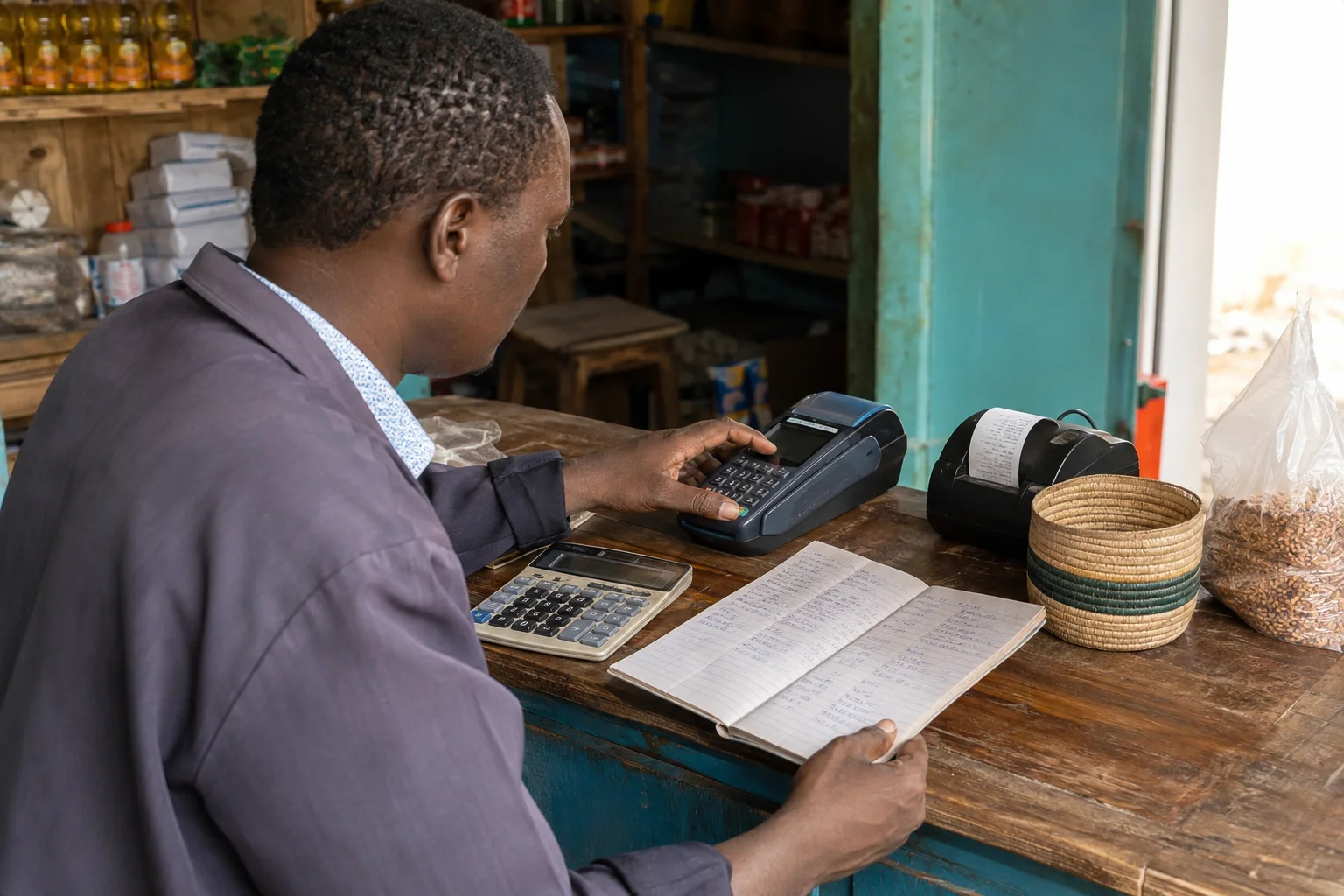
A Lipa na M-Pesa till number is how customers pay your business directly from their M-Pesa — the till is the merchant's collection number (5–7 digits). It is the most common way Kenyan SMEs collect digital payments, and for most small businesses it is better suited than a paybill (a paybill is a company account with multiple payee accounts; a till is a single merchant collection point).
Quick answers
- Merchant charge: collections of KES 500 and below are free for Lipa na M-PESA Buy Goods tills (under Safaricom's Pata More tariff); collections above KES 500 incur up to 0.55%, capped at KES 200 per transaction (confirm current rates on safaricom.co.ke).
- Customer charge: generally no extra fee, except for fuel-station payments.
- Who can apply: businesses with an M-Pesa line; Safaricom's onboarding may ask for your ID and business documents (sometimes a KRA PIN) — confirm at application.
- Tax: till collections are business income — keep records and file properly (see section 5).
1. What a till number is vs a paybill
| Till (Lipa na M-Pesa) | Paybill | |
|---|---|---|
| Number format | 5–7 digits | 6–7 digits |
| Best for | Small merchants taking direct payments | Businesses with many departments/customers (e.g. utility bills) |
| Payment flow | Customer pays to the till, money goes to your business till account (an M-Pesa account linked to the till) | Customer enters account number alongside the paybill |
| Merchant charge | Free up to KES 500; above KES 500, up to 0.55% (capped KES 200) | Depends on the selected Safaricom PayBill tariff |
2. How to register a till number
- Have your business details ready: business name, your ID/registration documents, and the Safaricom line that will receive payments.
- Apply through Safaricom's official channels — the Lipa na M-Pesa application on the Safaricom business portal, or visit a Safaricom shop/authorised agent with your documents.
- Safaricom issues your till number and links it to your M-Pesa line.
- Display the till number on your shop, receipts and social pages — and test with a small payment before going live.
3. Charges: what the merchant pays (and what the customer doesn't)
Under Safaricom’s Pata More Business Till tariff, collections of KES 500 and below are free of merchant charges for Lipa na M-PESA Buy Goods tills. For transactions above KES 500, merchants pay up to 0.55% of the transaction value, capped at KES 200 per transaction. (Note: for Pochi la Biashara, a separate product for individuals/micro-traders, customer payments of KES 200 and below are free through 31 October 2026). Customers are not charged extra for paying via till, except for fuel-station payments. Always confirm current rates on Safaricom’s official charges page (safaricom.co.ke).
4. Limits you should know
- Transaction and daily limits for till payments are set by Safaricom's M-Pesa tier structure — they change, so check the current limits on Safaricom's official M-Pesa pages.
- Money received via till sits in your business M-Pesa account and can be withdrawn via agents, M-Pesa to bank, or used for payments.
- For large single payments, a paybill or bank transfer may suit your customer better — most businesses offer both.
5. Tax angle: till payments are taxable income
Frequently Asked Questions
How much does Safaricom charge me for till payments?
Collections of KES 500 and below are free of merchant charges for Lipa na M-PESA Buy Goods tills under Safaricom's Pata More tariff. For collections above KES 500, merchants pay up to 0.55% per transaction, capped at KES 200. Pochi la Biashara is a separate product with its own KES 200 free threshold ending 31 October 2026. Confirm current rates on Safaricom's official charges page.
Can I have more than one till number?
Yes — many businesses run multiple tills (per branch or per line). Each till is registered to a business M-Pesa line.
Till or paybill — which should I choose?
A till is simpler for a single merchant collecting payments. Choose a paybill when you need many payee accounts (e.g. different products/departments) under one number.
Is a till number the same as a paybill number?
No — see the table in section 1. Tills are direct merchant collection points; paybills are company accounts where customers add an account number.
Sources and update record
Updated 26 October 2026: Resolved conflicting source-check dates while retaining the original tariff verification record.
Provider and date note: Rates, limits, fees, availability and product terms can change by provider, product and date. Treat figures here as guidance, check the dated first-party source above, and confirm the current schedule before acting.
Stay updated
 Stay updated
Get the next guide in your inbox.